 by Dr. Mercola
Glaucoma is the second leading cause of blindness in the world, and belongs to a group of eye diseases that damage your optic nerve, leading to vision loss. In its early stages, glaucoma may produce no symptoms at all, and it’s estimated that half of the more than 4 million Americans with glaucoma do not even realize they have it.[1]
Because the vision loss caused by glaucoma comes on so gradually, it is sometimes called the “silent thief of sight.” Often, it’s not until the disease is at an advanced stage that the related vision loss becomes apparent, and by then your sight may suffer permanent damage.
This is why it’s so important to take steps now to help protect your vision, even if your eyesight is normal. I’ll be discussing exactly what you can do to help prevent and treat glaucoma later in the article, but first here’s a bit of background on this common eye problem.
The underlying causes of glaucoma are not completely understood, but typically the damage it does to your optic nerve is related to increased pressure in your eye. The pressure typically comes from a buildup of pressure from the aqueous humor, the watery fluid that is naturally present in your eyeball.
In a healthy eye, the fluid is regularly drained, however in those with glaucoma the drainage system doesn’t work properly, so the fluid gradually builds up in your eye, causing increased pressure. Over time, the increased pressure causes nerve fibers that are essential to vision to die.
Though less common, glaucoma can also occur when eye pressure is normal. It appears some people’s optic nerves may be sensitive to normal levels of eye pressure, or the glaucoma may be related to problems with blood flow to your eye, which may be caused by atherosclerosis -- the accumulation of plaques in your arteries -- or another circulation problem.
In the most common type of glaucoma, open-angle (chronic) glaucoma, side (peripheral) vision is usually affected first. In the later stages, glaucoma can lead to “tunnel vision,” where you can only see straight ahead, and can eventually lead to blindness. The symptoms are gradual and come on very slowly, so you may not realize your vision is being impacted until much later stages.
About 10 percent of those with glaucoma have what’s called angle-closure (acute) glaucoma, and in these cases a sudden rise in eye pressure can cause:
- Severe eye pain
- Blurred vision
- Sudden visual disturbances
- Halos around lights
- Reddening of the eye
- Nausea and vomiting
This latter form usually requires immediate treatment.
Who is at Risk?
Anyone can get glaucoma, but there are factors that increase your risk:
- Certain ethnicities: Glaucoma is six to eight times more common in African-Americans than in Caucasians.[2] Mexican-Americans, Asian-Americans and Japanese-Americans are also at an increased risk.
- Over 60 years old: The risk of glaucoma increases once you are over 60.
- Chronic diseases: Diabetes, high blood pressure, heart disease and hypothyroidism all increase your risk.
- Family history: If someone in your family has glaucoma, it may increase your risk.
- Eye injury and nearsightedness: Eye injuries such as retinal detachment, eye tumors, eye inflammations and eye surgery, as well as nearsightedness, increase your risk.
- Use of corticosteroids: A prolonged use of these drugs appears to increase your risk, especially corticosteroid eye drops.
Making Sure Glaucoma is Diagnosed Correctly
Ophthalmologists typically rely on a simple "air puff" test to check for high pressure inside your eye. However, if you are getting screened for this disease, please make sure you also have your corneal thickness measured using a relatively newer test called pachmyetry.
Pachymetry, which measures corneal thickness, may be a more reliable indicator of the pressure inside your eye because the thickness of your cornea can significantly influence the readings on the air puff test.
If you have thin corneas, the instrument may give falsely low readings and may miss the diagnosis of glaucoma. If you have thick corneas the air puff test can actually misdiagnosis you as having glaucoma despite the fact that you have normal eye pressures.
Conventional Ways Lower Your Eye Pressure
Conventional medicine’s solution to glaucoma is typically drugs or surgery, or a combination of them. Often eye drops are given to glaucoma patients to use for life in an attempt to lower pressure inside of their eyes, but they come with a laundry list of side effects including:
- Blurred vision
- Respiratory problems
- Forgetfulness
- Lowered heart rate
- Burning or stinging in the eyes
Surgery also carries with it serious risks, among them an increased risk of cataracts.
You do have another option, though, as surprising as it may sound the same lifestyle changes that lower blood pressure typically also work to lower your eye pressure, thereby helping to prevent and even treat glaucoma without a risk of side effects.
The top two steps are:
- Lower your insulin levels: As your insulin levels rise, it causes your blood pressure, and possibly also your eye pressure, to increase. In time this can cause your body to become insulin resistant, and studies show insulin resistance -- which is common in people with diabetes, obesity and high blood pressure -- is linked to elevated eye pressure.[3]
The solution is to avoid sugar and grains, the two “food groups” that will inevitably cause surges in your insulin levels. Even whole, organic grains will rapidly break down to sugars, so they too should be avoided. So in addition to avoiding sugar, if you have glaucoma or are concerned about it, you’ll want to avoid foods like:
- Breads
- Pasta
- Rice
- Cereal
- Potatoes
- Exercise regularly: One of the most effective ways to lower your insulin levels is through exercise. A regular, effective exercise program consisting of aerobics, sprint-burst type exercises, and strength training can go a long way toward reducing your insulin levels and protecting your vision.
Other Tips to Keep Your Vision Healthy
As part of your overall program to keep your eyesight clear and problem-free, even as you age, make sure you are doing the following:
- Taking an animal-based omega-3 fat supplement. A type of omega-3 fat called docosahexaenoic acid (DHA) may help protect and promote healthy retinal function. DHA is concentrated in your eye's retina and has been found to be particularly useful in preventing macular degeneration, the leading cause of blindness.
Omega-3 fat, including DHA, is found in fish, but I don't recommend eating fish due to the concerns of mercury and other toxins that have been found in fish from oceans, lakes and streams and farm-raised fish. Instead, my most highly recommended source for omega-3 fat is krill oil.
- Getting loads of lutein and zeaxanthin. Many have never heard of these two vision powerhouses, but they are incredibly important for your eyesight. Lutein, which is a carotenoid found in particularly large quantities in green, leafy vegetables, acts as an antioxidant, protecting cells from free radical damage.
Some excellent sources include kale, collard greens, spinach, broccoli, brussels sprouts and egg yolks, particularly raw egg yolks. Egg yolks also have zeaxanthin, another carotenoid, in an equal amount to lutein. Zeaxanthin is likely to be equally as effective as lutein in protecting eyesight.
It is important to note that lutein is an oil-soluble nutrient, and if you merely consume the above vegetables without some oil or butter you can't absorb the lutein. So make sure you’re eating some healthy fat along with your veggies,
Eggs yolks are also loaded with these nutrients but once the egg is cooked they tend to be damaged and non useful. So you can consume them raw by whipping them up in a shake or cooking them minimally as in sunny side or poach them with runny yolks.
- Avoiding trans fats: Trans fat may interfere with omega-3 fats in your body, which are extremely important for your eye health. A diet high in trans fat also appears to contribute to macular degeneration. Trans fat is found in many processed foods and baked goods, including margarine, shortening, fried foods like French fries, fried chicken and doughnuts, cookies, pastries and crackers.
- Eating dark-colored berries. The European blueberry, bilberry, is known to prevent and even reverse macular degeneration, and bioflavonoids from other dark-colored berries including blueberries, cranberries and others will also be beneficial. They work by strengthening the capillaries that carry nutrients to eye muscles and nerves.
However, because berries contain natural sugar they should be eaten in moderation to avoid upsetting your insulin levels.
Following the healthy lifestyle tips I’ve described above will go a long way toward protecting your vision, whether you’ve been diagnosed with glaucoma or simply want to keep your eyesight in top condition. If you have glaucoma, however, it’s especially important to eliminate those grains and sugars, get exercising, and consume animal-based omega-3 fat regularly in order to keep the disease from progressing.

 Posts
Posts


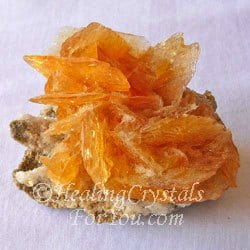
 Selenite is an excellent crystal to work with while
meditating. Place one nearby to help keep your mind clear, lucid and calm.
Because of its ability to calm and clear the mind, it can be good to keep with
you during times of emotional stress.
Selenite is an excellent crystal to work with while
meditating. Place one nearby to help keep your mind clear, lucid and calm.
Because of its ability to calm and clear the mind, it can be good to keep with
you during times of emotional stress. Selenite is the only crystal that is able to clear and recharge
other crystals. If a piece of Selenite is placed in contact with another
crystal, such as quartz, it will cleanse away any negative energies within that
crystal. Another unique quality of Selenite is its ability to constantly cleanse
and recharge itself. I personally use Selenite 'towers' such as the one to the right, in the center of my altar(s) to cleanse and 'keep clear' all my stones. Also, when I had a store, I kept a Selenite 'block' like the one pictured above, in the showcase to recharge all the stones.
Selenite is the only crystal that is able to clear and recharge
other crystals. If a piece of Selenite is placed in contact with another
crystal, such as quartz, it will cleanse away any negative energies within that
crystal. Another unique quality of Selenite is its ability to constantly cleanse
and recharge itself. I personally use Selenite 'towers' such as the one to the right, in the center of my altar(s) to cleanse and 'keep clear' all my stones. Also, when I had a store, I kept a Selenite 'block' like the one pictured above, in the showcase to recharge all the stones.


Friends And Family
By Sharing this Article.